
Here is a short list of recent notable AI developments that we think professional writers and publishers should be paying attention to:
“Vibe-Written” With Symbolic
The $20 Million Precedent: New York Times Digs In for Long Legal War with AI Giants
NYT CEO confident company will win legal battles against OpenAI/Microsoft, Perplexity | Axios: 1 The New York Times has spent a staggering $20 million over the last two and a half years funding its copyright infringement lawsuits against OpenAI, Microsoft, and Perplexity. CEO Meredith Kopit Levien made it clear that the publication is fighting for the survival of the premium content ecosystem, warning that without a sustainable business model for original reporting, there will soon be nothing left for LLMs to scrape. This high-stakes legal crusade highlights the growing divide between legacy creators willing to bankrupt themselves to protect their IP and tech platforms building multi-billion dollar products on unlicensed data.
CMA Forces Google’s Hand: UK Publishers Gain World-First AI Opt-Out Power
Google must let publishers opt out of AI Search features, rules UK | The Verge: 1 In a world-first regulatory intervention, the UK’s Competition and Markets Authority (CMA) has ordered Google to let website owners opt out of AI Search features—including AI Overviews—and prevent their content from being used to fine-tune AI models. Google is rolling out a dedicated Search Console toggle alongside transparency metrics, presenting publishers with a brutal, zero-sum dilemma: opt out of AI scraping to protect intellectual property, or stay opted-in to avoid losing vital search visibility and referral traffic.
The Music Industry’s First AI Treaty: NMPA Inks Industry-Wide Licensing Deal with Udio
NMPA Reveals Licensing Agreement With Udio | The Hollywood Reporter: 1 In a major shift toward commercial co-existence, the National Music Publishers Association (NMPA) has signed its first industry-wide licensing agreement with AI music generation platform Udio, framing the move as bringing creators to the table as genuine business partners. The milestone comes just months after Udio settled copyright suits with major labels Universal and Warner, contrasting sharply with the news industry’s fragmented and heavily litigated response. While the deal establishes a legitimate path for music rights holders to extract value, the NMPA warns that it will continue aggressive litigation against “bad actor” AI engines that continue scraping without permission.
Here’s What’s New In Symbolic:
What is a Style Guide?
A style guide is a document that defines rules for creating content. It covers writing standards like grammar preferences, punctuation rules, and word choices. Think of a style guide as a rulebook for brand communication—it tells writers whether to use the Oxford comma, explains tone and voice, and tells everyone on the team how to spell the company name correctly. Consistency builds trust. When a brand sounds different across every touchpoint, readers notice. A style guide ensures that blog posts, social media updates, and customer emails all feel like they come from the same source. Over time, a writer, a team or a publication can build a readily identifiable and persistent brand.
Style Guides can be complex, and implementing them consistently is not simple. The rules can accumulate (to hundreds of pages in some cases) and its easy to have inconsistency and confusion in their application. Many organizations with complex Style Guides spend significant time and money applying them, with mixed results at best. Dump a Style Guide into an LLM and ask it to apply it to a document and you will almost certainly get…. a mess.
Building and Updating a Style Guide With Symbolic
Symbolic has spent months working on software, algorithms, and AI inference loops that work together, resulting in the most comprehensive and accurate Style Guide tool available today. Symbolic can create a Style Guide from writing samples, using the Library or manually added documents to extract rules from content. The greater the corpus of writing, the more comprehensive the Style Guide. Once created, the Symbolic Style Guide becomes a living document, constantly improving and updating itself as new documents are added to the Library. Symbolic creates an initial version of a Style Guide, it applies it to drafts (as below), and automatically updates it when new documents are added to the Library. Administrators ensure that any changes to an Organization’s Style Guide are fully authorized and approved.
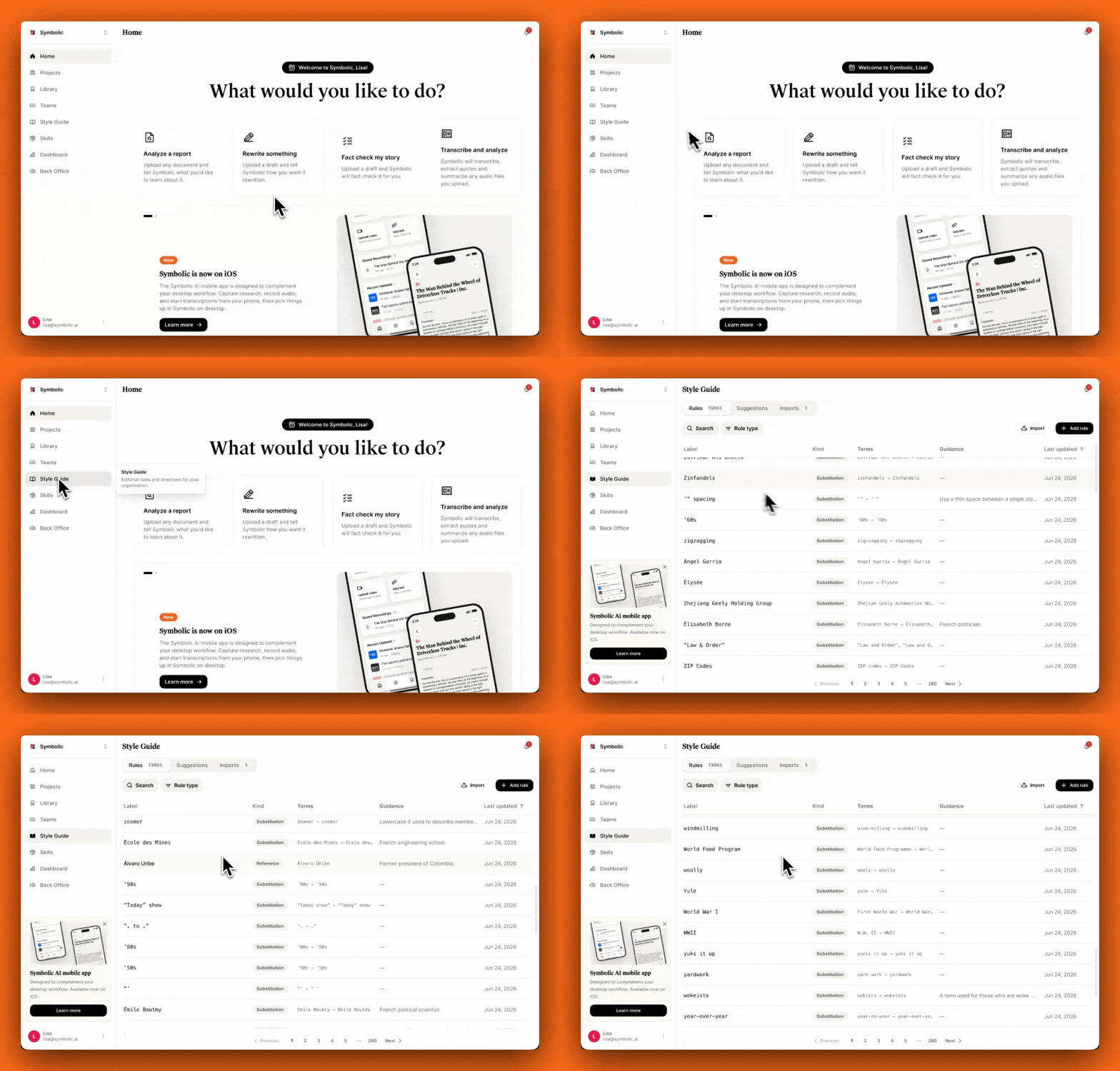
Applying a Comprehensive Style Guide with Symbolic
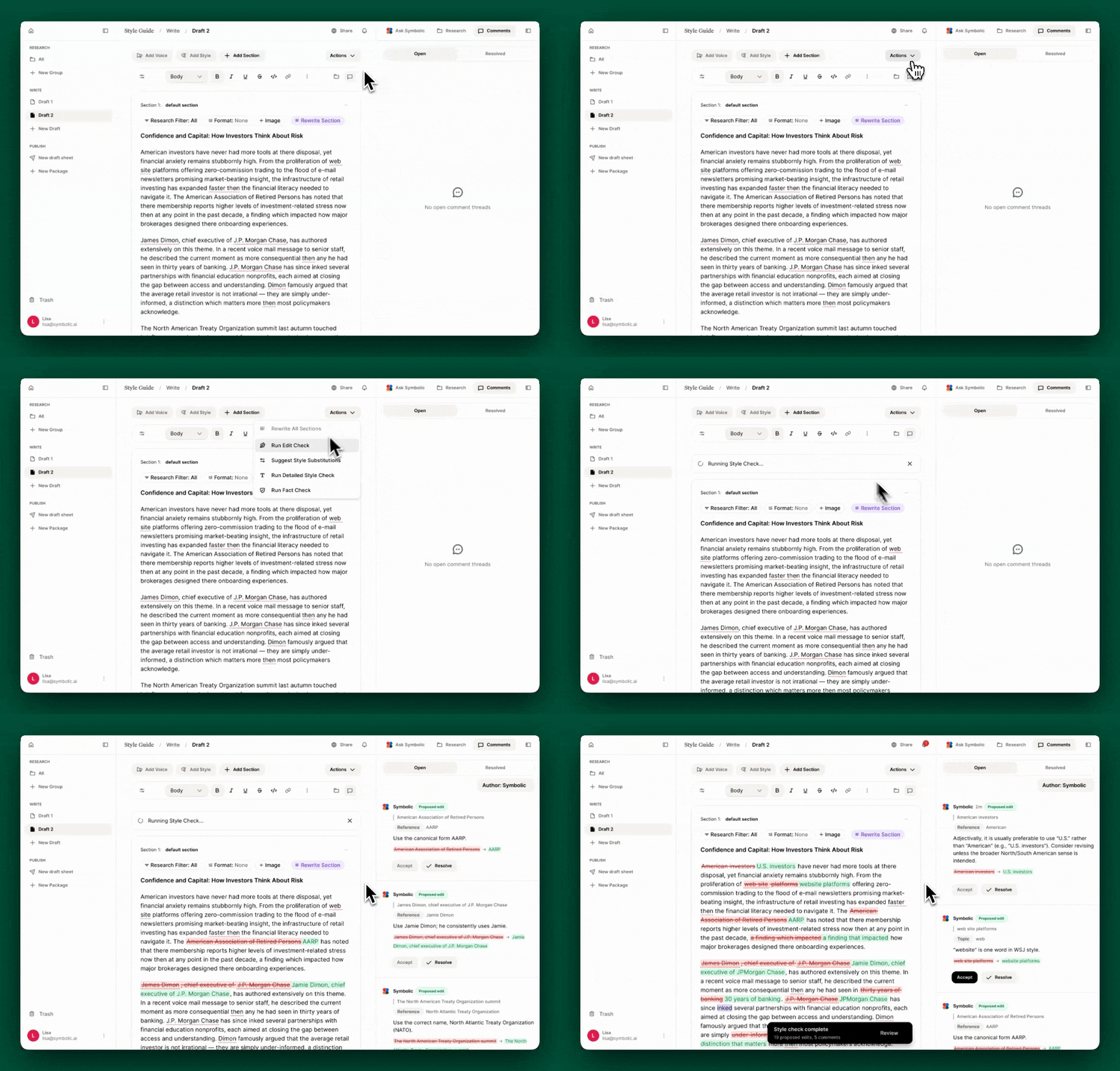
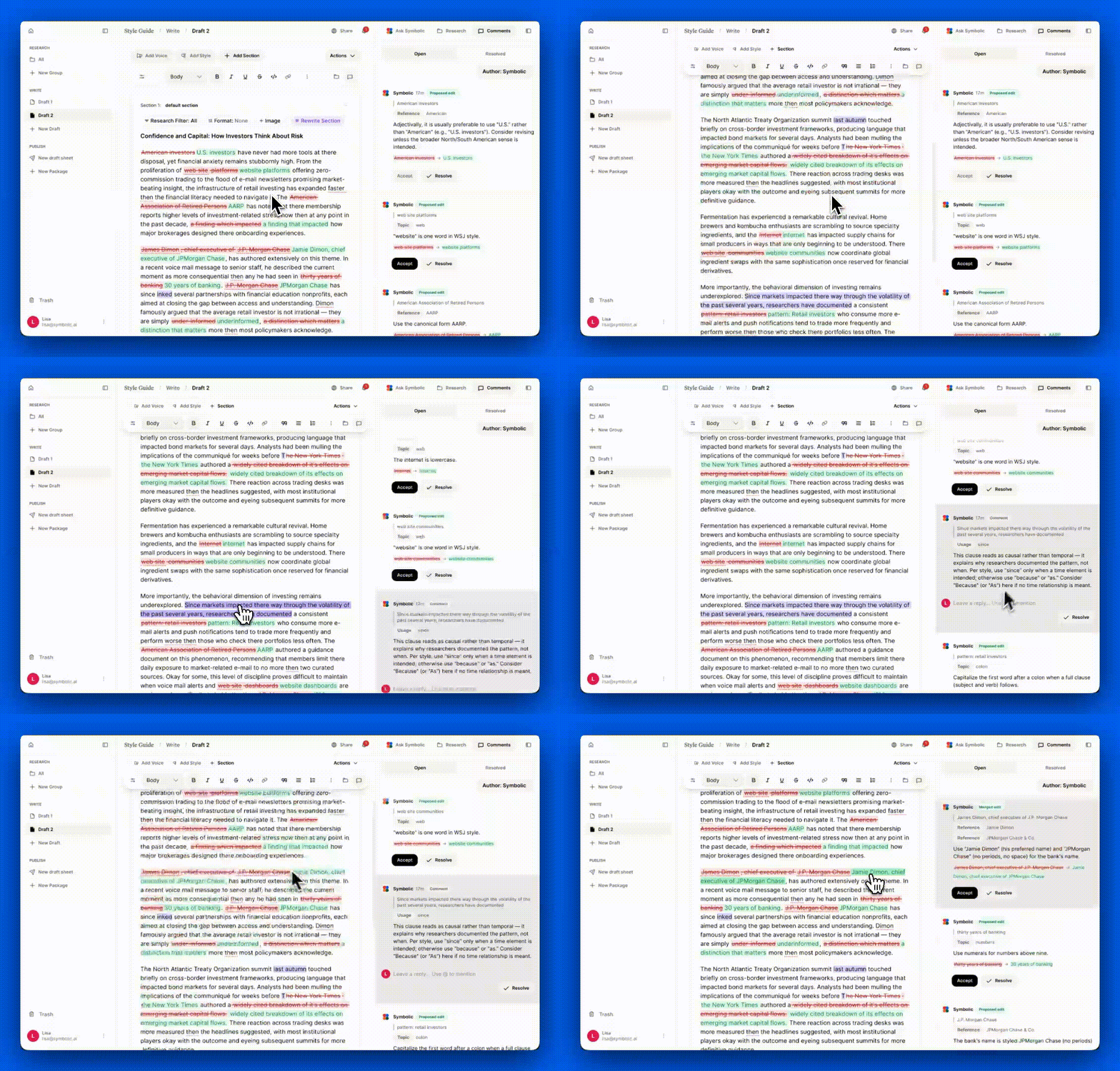
Once a Style Guide is created, it’s available for use by any authorized user in the org. A user can click on the “Run Detailed Style Check” button in the Actions menu for any draft to see where the copy conflicts with the Style Guide. First, straightforward substitutions are suggested. Users can accept the changes individually or in bulk. Other rules generate comments that usually require more consideration. When any suggestion is accepted Symbolic scans the whole draft again, to make sure that the change does not impact the application of any other rules. The editor can work down the list quickly and efficiently, and ensure that the entire Style Guide is being applied consistently to the draft.
Style Guide comments are left by the Symbolic Style Guide agent. Editors can accept the suggested change, resolve the comment to reject it, or make a manual edit to the draft.
That’s it from us this week. We are always working to improve Symbolic and make your experience more efficient and enjoyable. We would love to hear your feedback and any suggestions you may have for future updates. Don’t hesitate to reach out to team@symbolic.ai.